IndirectSlimline Hot Water Cylinders
Narrow-footprint boiler storage.


Megaflo Eco 100 Litre Slimline Indirect Unvented Hot Water Cylinder
£1,271.00EX VAT · £1,525.20 INCView product
Megaflo Eco 125 Litre Slimline Indirect Unvented Hot Water Cylinder
£1,414.00EX VAT · £1,696.80 INCView product
Megaflo Eco 150 Litre Slimline Indirect Unvented Hot Water Cylinder
£1,579.00EX VAT · £1,894.80 INCView product
Megaflo Eco 170 Litre Slimline Indirect Unvented Hot Water Cylinder
£1,694.00EX VAT · £2,032.80 INCView product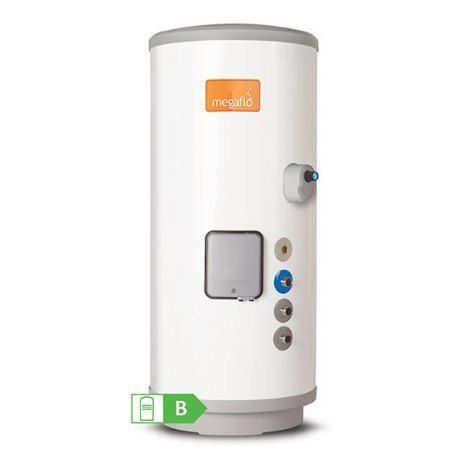
Megaflo Eco 200 Litre Slimline Indirect Unvented Hot Water Cylinder
£1,884.00EX VAT · £2,260.80 INCView product


Talk to a
specialist
Sizing, regulations, installation. Our team has been answering these questions for over 25 years.
Our indirect slimline hot water cylinders are perfect for properties with existing boiler systems and limited space. These compact units connect to your central heating boiler through an internal coil, heating water efficiently whilst fitting into tight spaces like airing cupboards and utility rooms. The indirect design means your boiler heats the water, making these cylinders ideal for properties already equipped with gas or oil heating systems. This setup typically provides more cost-effective heating compared to electric alternatives, particularly for households with high hot water demand. Built with high-quality materials and advanced insulation, these cylinders maintain water temperature effectively whilst minimising heat loss. The slimline profile doesn't compromise on capacity, delivering reliable hot water supply for your daily needs. For properties without central heating systems, our direct hot water cylinders or direct slimline hot water cylinders offer electric heating independence. Alternatively, if you're looking for enhanced water pressure throughout your property, our Megaflo hot water cylinders provide pressurised systems that deliver excellent flow rates to multiple outlets simultaneously.
Indirect Slimline Hot Water Cylinders FAQs
What does "indirect" actually mean, and how is it different from a direct cylinder?
An indirect cylinder has an internal heat exchanger coil through which hot water from your gas or oil boiler passes, transferring heat to the stored water without mixing with it. A direct cylinder instead heats water using its own immersion elements, drawing electricity rather than boiler-heated water. If you already have a working boiler and central heating system, indirect is almost always the more efficient and cost-effective choice.
What makes a slimline cylinder different, and will it fit my airing cupboard?
Slimline cylinders have a reduced diameter compared to standard indirect cylinders, typically bringing the width down to around 400-450mm, while keeping height and capacity similar. This makes them ideal for narrow airing cupboards, utility cupboards or tight loft spaces where a standard-diameter cylinder simply wouldn't go in. Always check both the diameter and height against your available space before ordering, as insulation jackets add a little extra to the stated cylinder dimensions.
Are these cylinders vented or unvented, and does that affect installation?
Indirect slimline cylinders are available in both vented and unvented versions. Vented cylinders need a cold water feed and expansion tank in the loft and operate at mains-fed low pressure, whereas unvented cylinders connect directly to mains pressure and don't need a header tank, giving better flow rates. Unvented models must be installed by a competent, G3-qualified engineer and include the required safety valves and expansion arrangements under Building Regulations Part G3.
Can I run an indirect slimline cylinder from a combi boiler?
No — combi boilers heat water on demand and aren't designed to work with a stored hot water cylinder. Indirect cylinders need a conventional (heat-only) or system boiler that can circulate heated water through the cylinder's coil. If your property has a combi boiler and you want to add a cylinder, you'd need to change the boiler type as part of the installation.
What size cylinder do I need for my household?
As a rough guide, a 1-2 bedroom property with one bathroom often suits a 120-150 litre cylinder, while a 3-4 bedroom house with an en-suite typically needs 180-250 litres. Households with power showers, multiple bathrooms or high simultaneous demand should size up, or consider an unvented model for better recovery and flow rate. It's worth checking boiler output too, as recovery time depends on how quickly your boiler can reheat the stored water.
What are these cylinders made from, and how well do they retain heat?
Most indirect slimline cylinders are manufactured from grade 316 or 444 stainless steel, or copper, both of which resist corrosion well and carry long manufacturer guarantees. They're wrapped in factory-fitted high-density foam insulation, which significantly reduces standing heat loss compared to older jacket-and-tank designs. This means water stays hotter for longer between boiler firing cycles, cutting down on unnecessary reheating and running costs.